
Pectin gummy bases are held at 85–95 °C while pouring, and gelatin bases at up to 77 °C[13,14]. Heat drives peptide breakdown[2,3].
3D-printed peptide gummies
NewUS pharmacies can now compound BPC‑157 and KPV as oral forms →
Zero heat. Zero UV.
Zero heat. Zero UV.
Full potency.
Powered by Craft Health
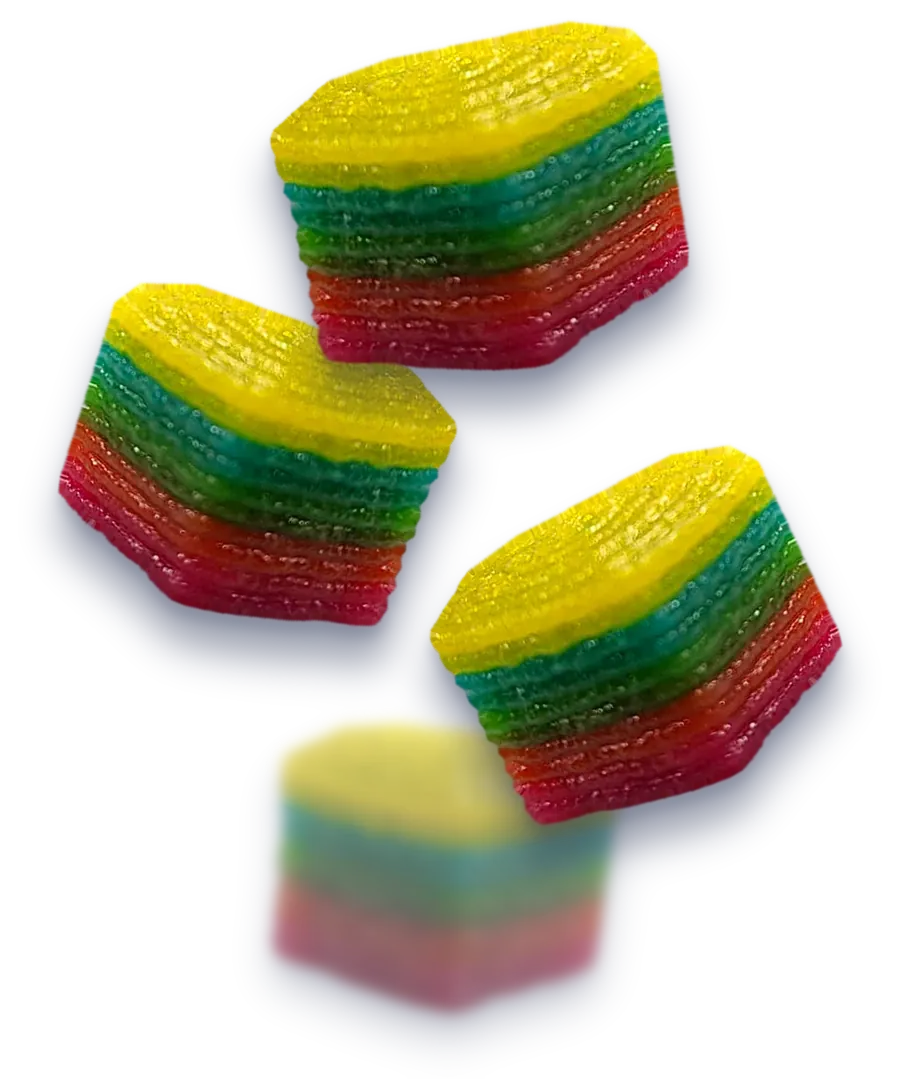
Print patient-specific peptide gummies at room temperature. No melting, no UV light, no hand pouring. Every gummy is dosed to the prescription and logged to a batch record.
- 25°C
- printing temperature
- 0UV
- no light-curing step
- ±1%
- dose accuracy, peer-reviewed
Why it matters
Heat and UV light break peptides down.
Resin printers harden each layer with UV light over hours of printing, then post-cure parts under UV at up to 80 °C[8,15,16]. The light and the radicals it creates damage peptides[1,4].
Printed at room temperature.
- No melt step, no heated hopper
- No UV light, no photoinitiator
- Each gummy printed to the prescribed dose
- A batch record for every print
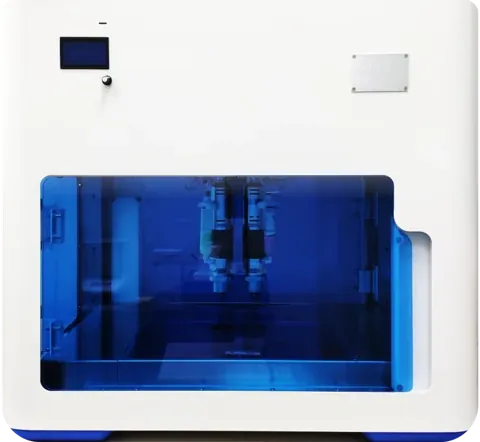
One printer, many formats.
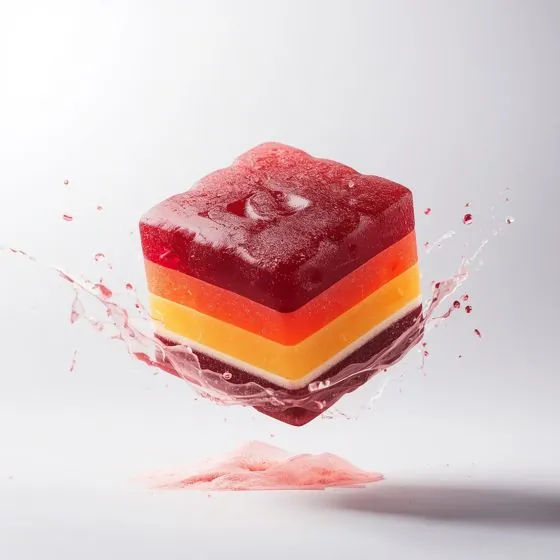
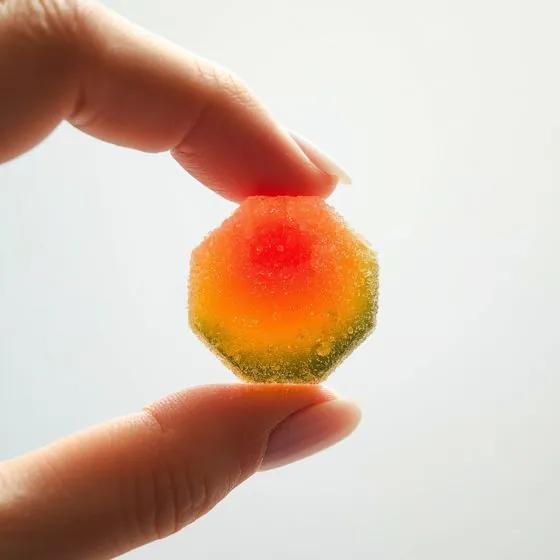
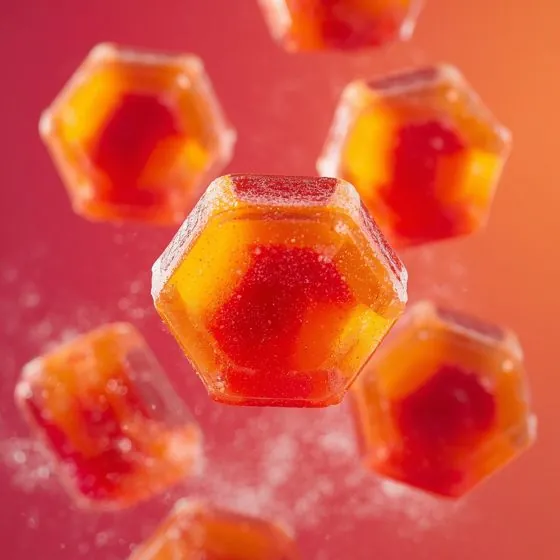
Format illustrations are concept renders.
Interactive · 6 actives
Explore the peptides we are preparing for.
Pick an active. See its weak points, how much survives each manufacturing method, and where it stands with FDA.
Heat and UV ratings are relative, from our theoretical model. No health claims are made and no product is offered for sale. Status as of November 2026; confirm with counsel before compounding.
How it works
Three steps from prescription to gummy.
- STEP 1
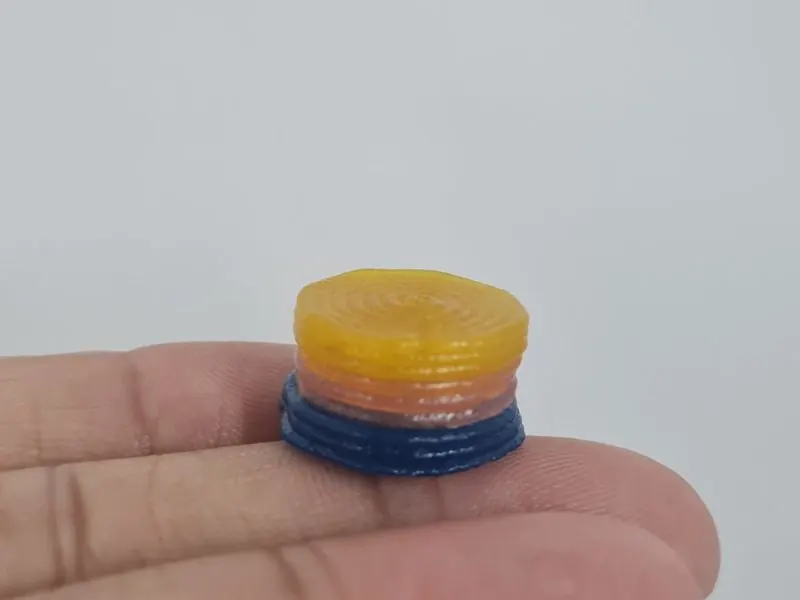
Enter the prescription
Type in the patient's dose. CraftControl™ locks it to your master formulation record. Mix the active into a CraftBlends™ gummy base.
- STEP 2
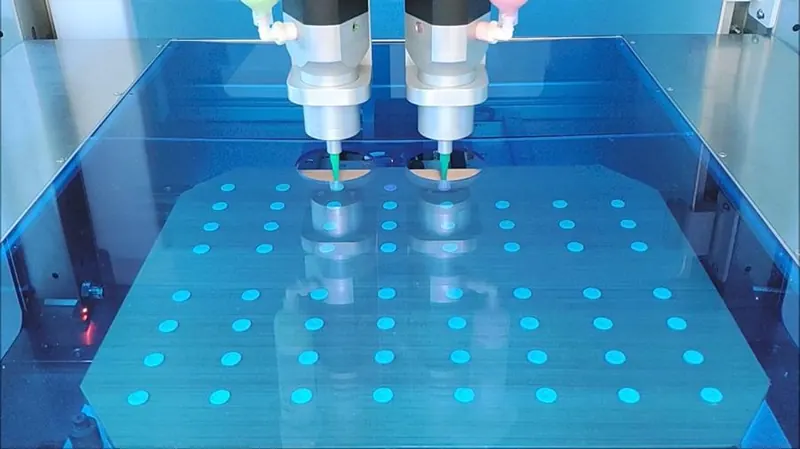
Print at room temperature
CraftMake™ prints each gummy to the exact dose. A technician sets it up; the printer runs on its own.
- STEP 3
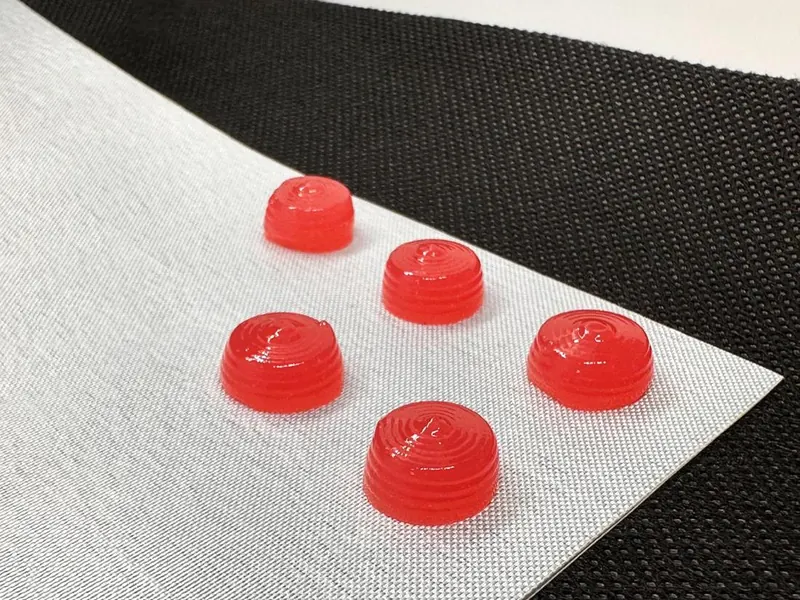
Pack and dispense
Each gummy is traceable to its batch, operator and printer settings, ready for your USP <795> records.
Printing at 25 °C
Watch a gummy build itself.
CraftMake™ extrudes the gummy mix one layer at a time. Nothing is heated and nothing is cured, so the peptide sees the same temperature it was compounded at.
Layer0 / 6
Print time0 s
Nozzle25 °C
UV dose0
A hot-pour pectin batch holds this mix at 85–95 °C while it is poured.
Animation is sped up. A real print takes about 1 minute per 2–3 g gummy.
Real prints
Made on CraftMake™, not in a mould.
Liquid cores, embedded inclusions and precise placement, all printed at room temperature in our lab.
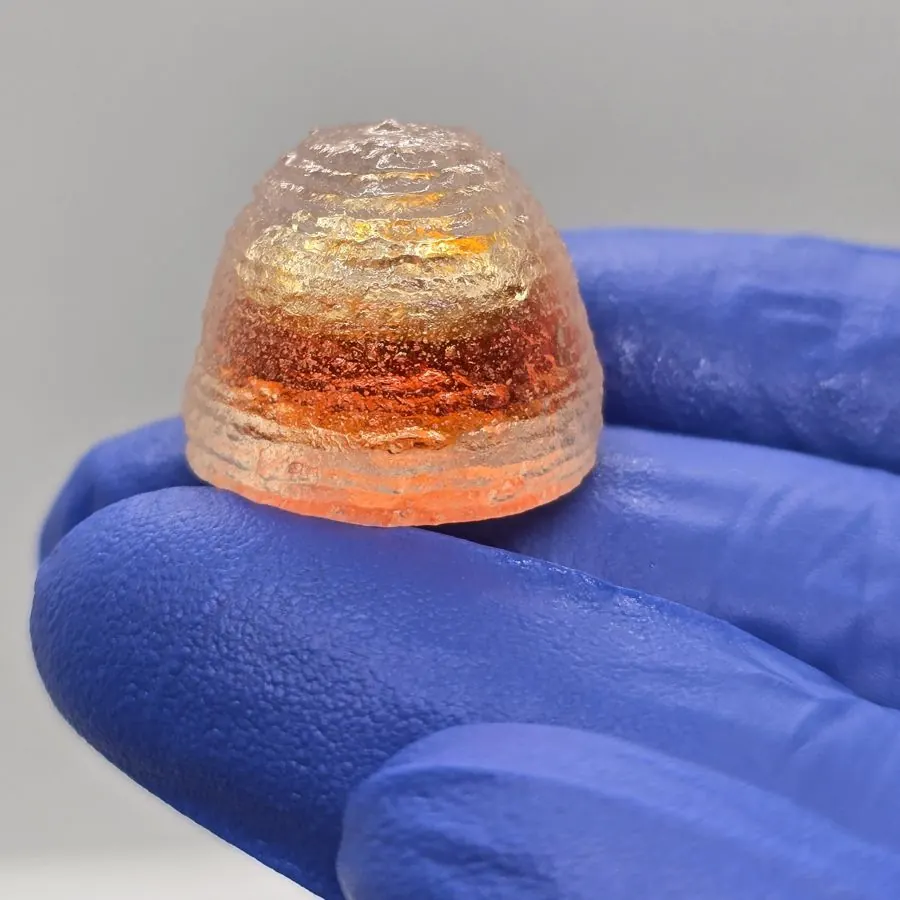
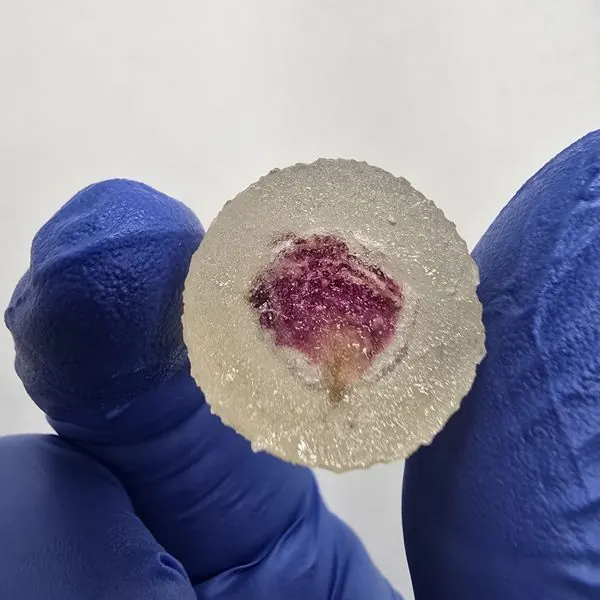
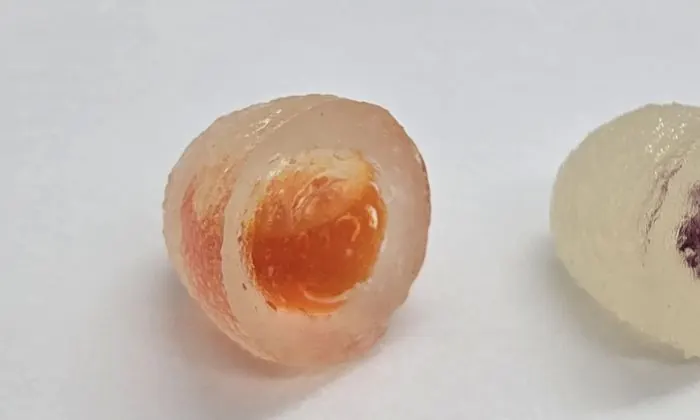
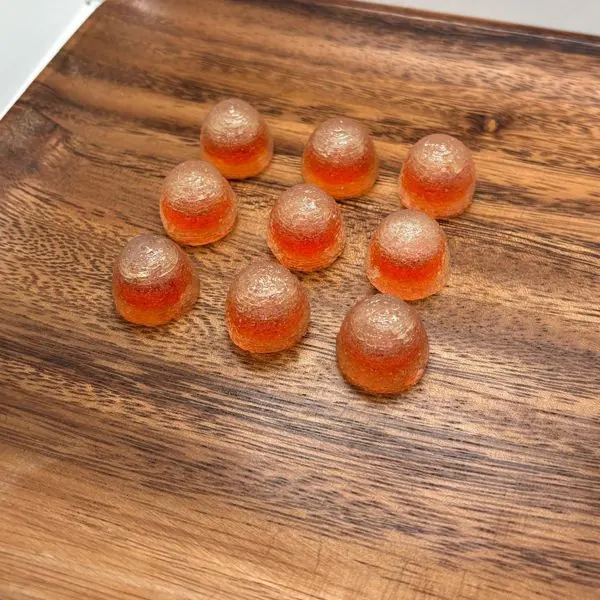
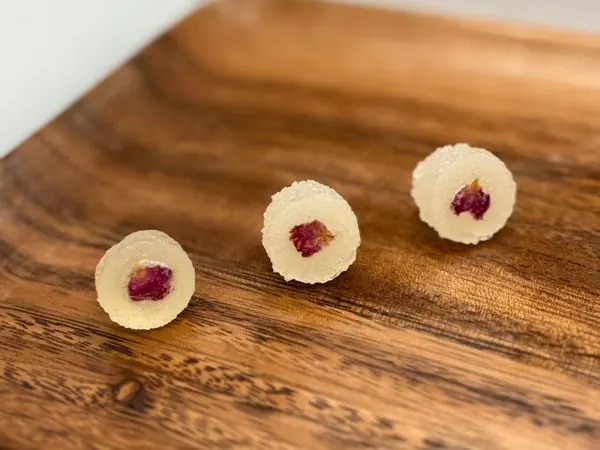
Food-grade demonstration samples. No peptides.
Interactive · titration
One printer. Every dose.
With moulds, each strength is its own batch. CraftMake™ sets the dose gummy by gummy, so a whole step-up pack comes off one print run.
% of the prescribed target dose
Step up
Gummies per day
Patient titration packPrinted in one run
LowerTarget dose
Gummies28
Different doses4
CraftMake™ run24 min
Hand-pour batches4
Illustrative only. The prescriber sets every dose. Print time assumes about 1 minute per 2–3 g gummy plus 10 min set-up.
Output
How many more gummies per shift?
Hand-pouring ties up a technician for every batch. With CraftMake™, the technician sets up the print and moves on.
One shift, hand-pour vs CraftMake™
Scheduling modelHand-pour
CraftMake™
More outputper shift
Technician time savedhours
Illustrative model. Defaults: one technician, one CraftMake™ printer, about 1 minute per 2–3 g gummy. Hands-on time per dose reflects Craft Health in-house figures[10]. Add printers to scale output. Your timings will differ.
Regulatory status · Nov 2026
Where US peptide compounding stands today.
Since 30 October 2026, an interim HHS policy lets state-licensed compounding pharmacies make BPC-157 and KPV, including as oral forms, while FDA writes the permanent rule. Pharmacies with a validated oral dosage form can start now.
- SEP 2023BlockedFDA flagged BPC-157, KPV and others as possible safety risks, so pharmacies could not compound them.
- APR 2026Safety flag liftedTaken off FDA's safety-risk list, but not yet cleared for compounding.
- JUL 2026FDA advisers vote yesFDA's expert panel recommended allowing BPC-157 and KPV, 8–6.
- OCT 2026HHS interim policyPharmacies can compound BPC-157 and KPV, including as oral forms, one active per preparation.
- BY FEB 2027GHK-Cu reviewFDA's expert panel considers GHK-Cu and others.
- 12–24 MONTHSFDA final ruleFDA formally adds approved peptides to its list of ingredients pharmacies may compound.
The HHS policy means FDA will not act against pharmacies that follow its conditions. It is not FDA approval and can be withdrawn. For information only, not legal advice[11,12,17,18].
Questions pharmacists ask
Questions, answered.
Short answers to what compounders ask us most. For anything else, PharmaTher's team can help.
Ask PharmaTherCan we compound BPC-157 or KPV today?
Yes, as oral (or topical) forms, under the HHS interim enforcement discretion policy published on 30 October 2026. Each preparation must be patient-specific, contain a single listed peptide, use an active from an FDA-registered manufacturer with a full certificate of analysis, carry the label "This is a compounded drug product. Not for resale.", and, for oral forms, be backed by documentation of adequate oral bioavailability. The policy is interim, is not FDA approval and can change. Check with counsel for your state.
Why does UV matter if a gummy isn't cured?
Many 3D-printing methods for dosage forms use light to cure resin, and the photoinitiators they need create free radicals. Tryptophan, tyrosine, phenylalanine, histidine, methionine and copper complexes absorb or react, which is why PT-141, sermorelin and GHK-Cu show the largest UV losses in the actives explorer. CraftMake™ uses neither.
How does this fit USP <795>?
Each print runs from a locked digital recipe, and CraftControl logs formulation, operator, printer and print parameters for every batch, giving you the master formulation and compounding records.
Can every patient get a different dose?
Yes. The dose is set in software for each prescription, so you can print 2 mg for one patient and 3.5 mg for the next without new moulds or a new batch. Dosing precision is about ±1% in our peer-reviewed work.
Can two actives go in one gummy?
Not for BPC-157 or KPV: the HHS policy covers single-active preparations only. CraftMake™ can still print layers, for example the active in one layer and a taste-masking layer around it. For actives outside the policy, separate layers keep ingredients that react with each other apart.
What does the HHS policy need for an oral peptide gummy?
Documentation that your specific formulation achieves adequate oral bioavailability in humans, plus sourcing, labelling and adverse-event reporting records. Craft Health and PharmaTher support pharmacies with formulation data, stability studies and CraftControl™ batch records for every print.
What beyond-use date can we assign?
Set it under USP <795> using stability data for your formulation. Craft Health can support stability studies on your printed peptide gummies.
What does it take to get started?
PharmaTher installs the printer, runs IQ/OQ and trains your team on site. You mix your active into a ready-made CraftBlends™ base, so no formulation expertise is needed.
References
- Kerwin & Remmele 2007, J Pharm Sci
- Manning et al. 2010, Pharm Res
- Robinson & Robinson 2008, Biopolymers
- Lin et al. 2008, Biomacromolecules
- Xiang et al. 2023, China J Chin Mater Med
- Badenhorst et al. 2016, Pharm Dev Technol
- Sikiric et al. 2006, Inflammopharmacology
- Robles Martinez et al. 2017, Int J Pharm
- Craft Health heat chart, process temperatures, compiled
- Craft Health, in-house shift data
- US FDA 2026, 503A bulks categories
- RAPS 2026, PCAC peptide vote
- M2M Gummies 2024, pectin base work instructions
- M2M Gummies 2024, gelatin base work instructions
- Curti et al. 2021, Pharmaceutics
- Formlabs, Form Cure time and temperature settings
- HHS 2026, 503A peptide enforcement discretion policy, Fed Reg
- HHS 2026, Appendix B, permitted forms and routes
United States and Canada
PharmaTher runs CraftMake™ in North America.
PharmaTher Holdings is Craft Health's exclusive North American distributor. Its M3DICINES™ Network handles demos, installation, training, CraftBlends supply and service.
Emailpartners@m3dicines.comPhone1-888-846-3171
Outside North America, contact Craft Health directly at info@crafthealth.me.